
The true weight of raising another human is something that mothers inherently take on. We worry about so many things: is he eating enough vegetables? Did she get enough sleep? Did I give her the proper amount of tummy time, to develop her muscles for crawling? At every turn, we are faced with the opportunity to feel guilty for failing our child in some way. It really becomes a matter of how we deal with the guilt that matters.
I remember, early on in my first pregnancy, feeling like I had it all figured out. I worked part-time in a health food store, as a beauty consultant, so I had a huge knowledge base about natural products and all of the damage the world could do to people.
I spent most days explaining to people why sodium laurel sulphate was bad, and why mineral sunscreen was better than chemical. I knew to avoid BPA in canned food, didn’t eat anything but organic, “happy” meat, took caffeine out of my diet, stayed away from dairy and gluten. All in an effort to give my growing baby the best chance she had to be healthy.
And when she was born, she was healthy. But she wouldn’t latch, so I spent weeks pumping breast milk, finger feeding and using a nipple shield, until she finally could breastfeed easily. I was so thrilled.
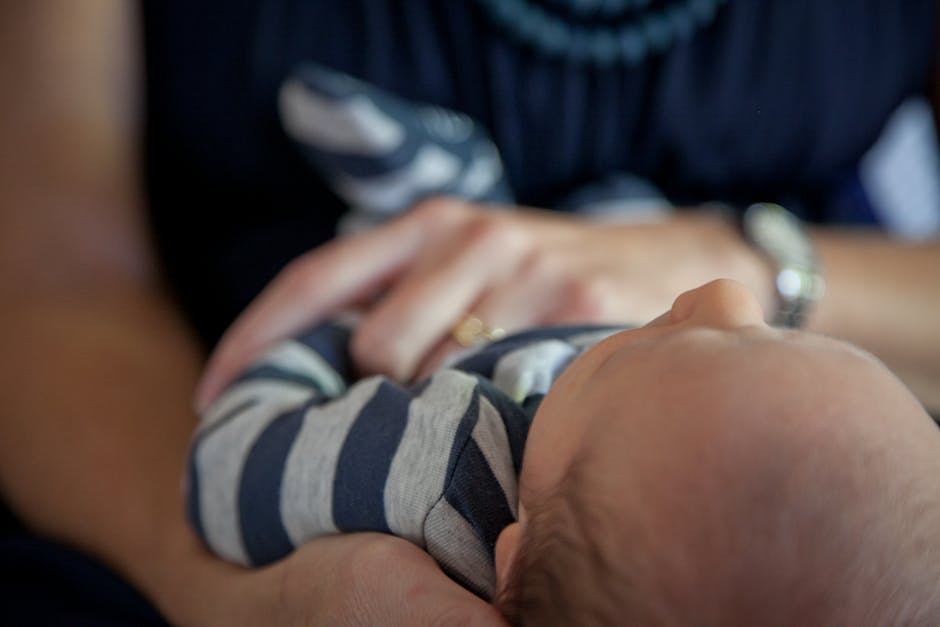
And then there was pain. And mastitis. And milk blisters. And problems with oversupply. And not getting enough hind milk into her. And screaming fits. And problems with weight gain. And then problems with undersupply. And going on supplements, and eventually medication, to help boost my supply back up. And having to wake her every two hours to feed her, but not solving the problem. She was dropping off the growth charts, and quickly.
It was a mess. I was a mess.
I had done so many things right, leading up to her birth. Why were things going so wrong?
It should be said that my baby girl was not a sickly-looking, failure-to-thrive child. No, she was whip-smart, meeting all of her developmental milestones, and happy as a clam, most of the time. People didn’t understand what the problem was and told me not to worry.
But I thought it was my fault, somehow. Maybe I hadn’t read her hunger cues properly, early on, and had missed enough feedings that I had wrecked her metabolism. Maybe that’s why she had those screaming fits. Yes, that was it. I had unwittingly starved her.
It was my dirty little secret and I carried it around with me, always. I was the reason she wasn’t growing. Why, despite all the tests that came back normal, she was below the 1st percentile in weight. I was the reason she had screamed, all those times. Those had been the screams of a child whose stomach wasn’t full, who was beyond being able to drink my milk, because it hurt too much.
People told me what a wonderful child she was. How smart she seemed, so full of big words for her age. How beautiful, though she was tiny. I smiled and nodded. But each time, I would add in, “But she’s wearing a skirt for a 6 month old, and she’s 2 and a half.” Apologetically. As if it were my cross to bear.
I did everything else “right.” I made baby food from scratch, with organic fruits and vegetables. All plastics were safe, though we gravitated toward wooden toys. Organic cotton, wherever possible. But it wasn’t enough to assuage the guilt I felt at my perception of failing my daughter in the most basic way.
That mommy guilt is really something. My husband, while no less concerned than me in the initial stages of her issues with weight gain, quickly began to see the light. He stopped worrying when he saw that she could easily consume 8 pieces of bacon, 2 eggs, cucumber slices and half a sweet potato, over the course of a few hours, and then come back complaining that she was hungry. He moved on.
I did not.

I talked about my guilt in therapy. I had another child that I fed with the same breasts, who gained weight like a champ. At 8 months, he weighed about the same as what she weighed at 2 years of age. Unlike her, he was at the top of the charts, even though he seemed to eat about the same. It should have felt like some kind of vindication, seeing those differences. That’s certainly what I told everyone else. Look! It wasn’t my fault, after all.
But it still feels like my fault.
My gut still twists, when I think about those crying fits she had as a baby. I’m still sure that I did something wrong. Logically, I don’t understand this guilt I feel. She is thriving now; she’s even climbed up a few percentiles. There is no reason for me to feel this way now, even if I was remiss in how I fed her in the beginning. But the guilt remains.
In the end, I’m not sure whether my story is one of heightened anxiety, or one of a typical mother. I know we all experience moments of guilt, throughout the upbringing of our children. After all, the responsibility of raising a successful human is a deep one.
Smart mothers are aware of all the things they can do to positively and negatively impact the world of that human. Even smarter are the mothers who are still aware of all those things, but let them go when they need to, in order to thrive as humans, themselves.
